After presenting the PeaceACT project to Gimnazija Ptuj, the school quickly expressed interest in hosting a local peace action. The timing was ideal: students had just marked the International Day for Tolerance, which meant the themes of respect, dialogue, and peaceful coexistence were already fresh in their minds.
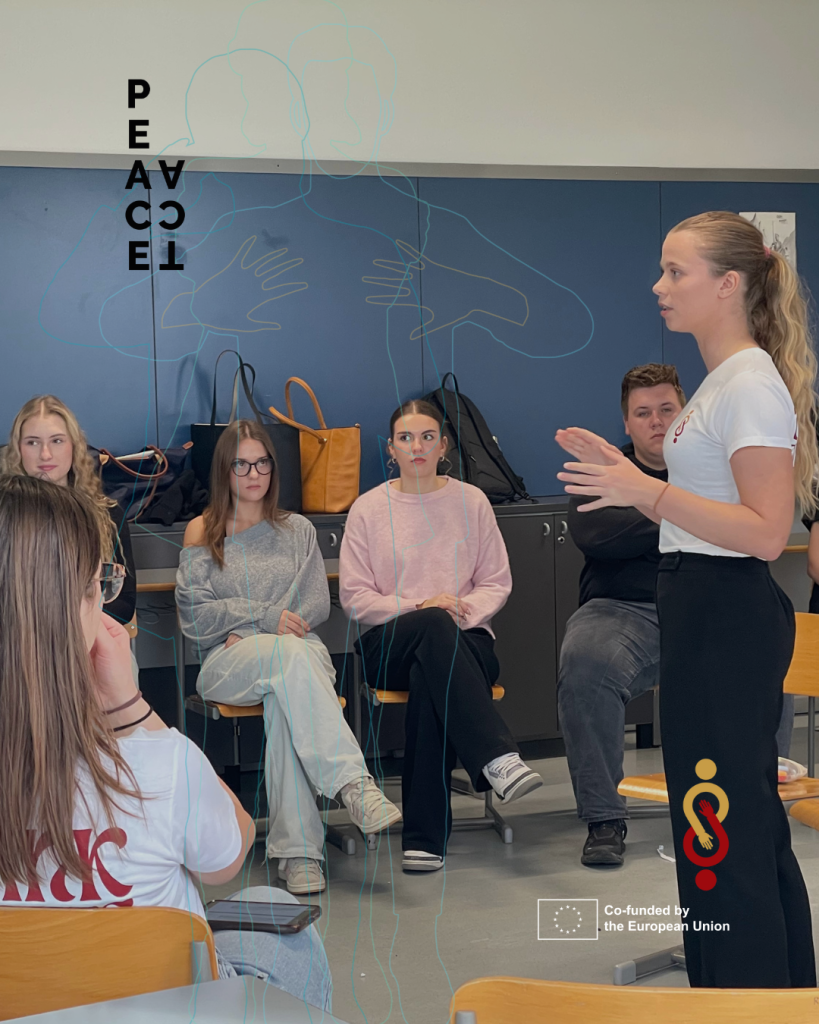
Building on this context, the workshop focused on non-violent communication, peaceful responses to conflict and future-oriented thinking. Our goal was to encourage students not only to reflect on peaceful futures but also to recognise their own role in creating them—today, in their schools, homes, and communities.
What we did?
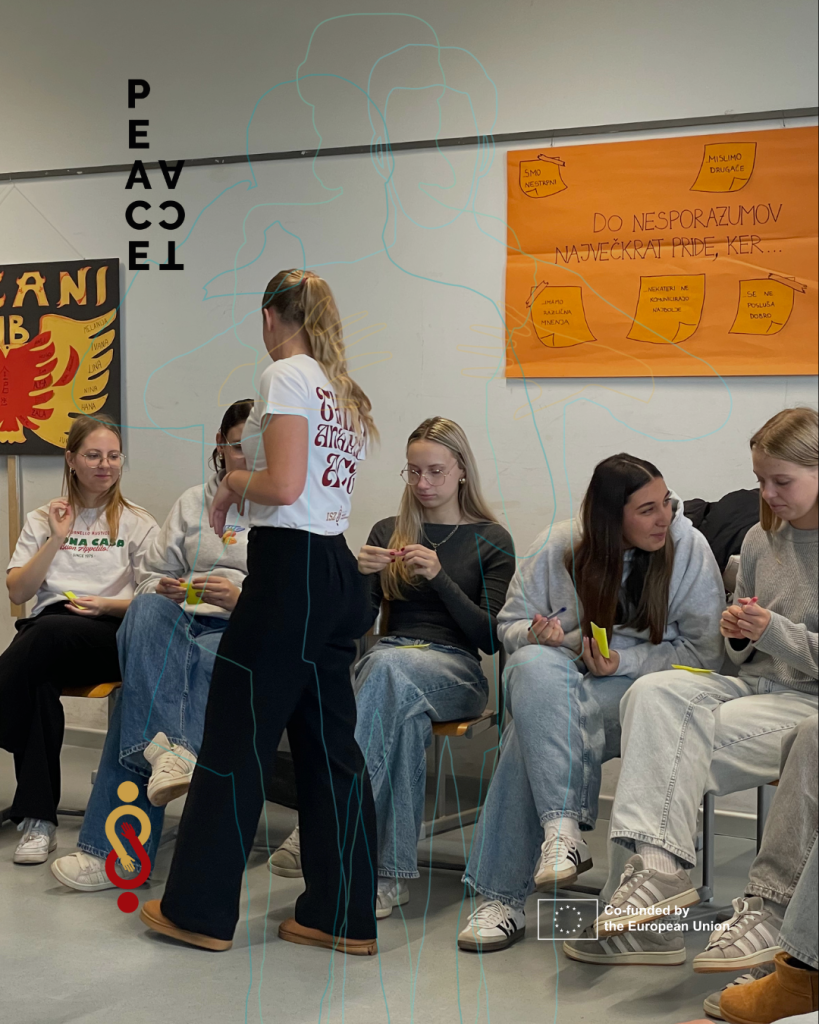
The session began with a light introduction and an icebreaker exploring the meaning of peace. Although none of the students knew a formal definition, they shared personal interpretations such as harmony, silence and tolerance, which helped ground the workshop in their lived experiences.
A dialogue exercise followed, in which students had to defend two contrasting statements—both positively and negatively—while switching roles. The activity revealed that respectful disagreement is possible but not always easy, especially when emotions are involved. Everyday examples, such as arguing with a sibling, helped students recognise how often impulsive reactions appear in real life.
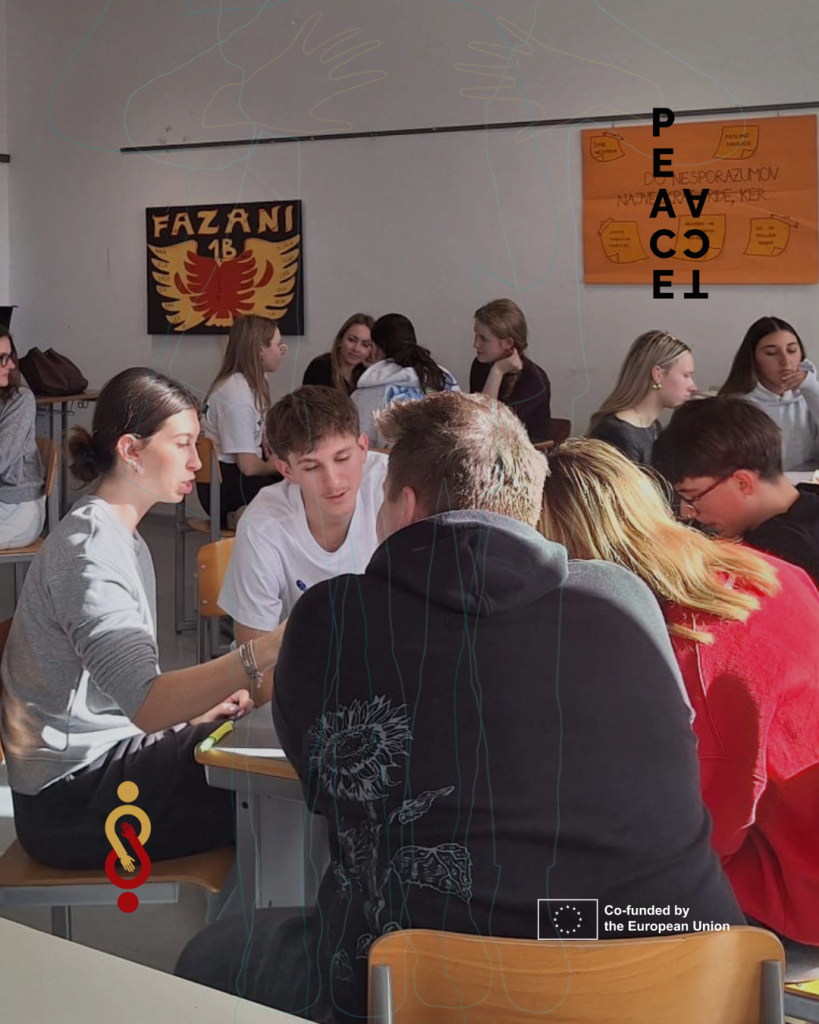
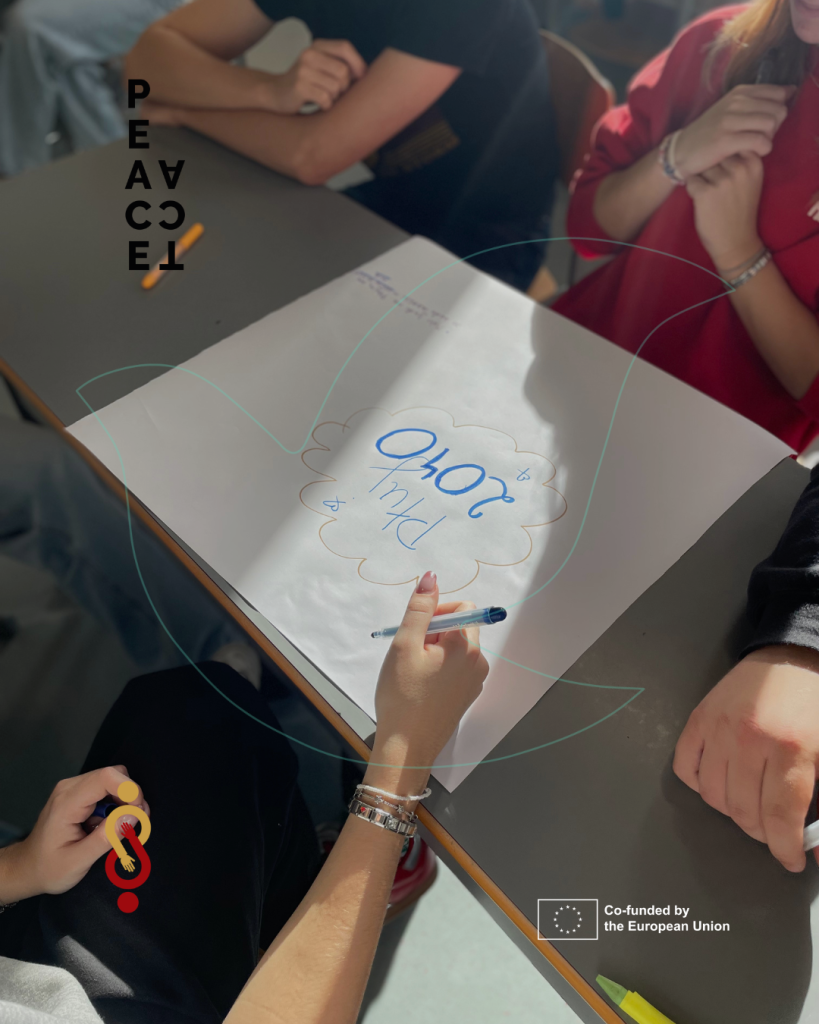
Next, students formed small groups to practice non-violent communication, active listening and inclusive decision-making. Through collaborative “future design thinking,” they imagined peaceful communities in the year 2040 , choosing their own contexts—from a school classroom to Ptuj, Slovenia, or even the global community. Each group addressed four guiding questions:
- What does your peaceful community look like?
- How was it created?
- How will it be sustained?
- What can you do today to make this future possible?
While their visions differed, one theme appeared across all groups: peace starts with personal responsibility.
To close the session, participants reflected on their own habits—what they already do to contribute to peace and what they would like to improve. The action was facilitated by youth mentors Maša, Vito, Lucija in Alen, pod kooridnatorstvom projektne vodje ISZ. Aktivnost smo zaključili tako, da smo vsakemu udeležencu podarili nalepko, ki spodbuja mirne reakcije – majhen opomnik, da mir začne z vsakdanjimi odločitvami.

 English
  Slovenian